

#Sewage treatment plant
#WastewaterTreatment
#SBRtechnology
#PE-Tank
#4-50PU
RoClean – Biological Wastewater Treatment System
The RoClean small-scale sewage treatment plant is a high-performance biological wastewater treatment system designed for domestic wastewater. Thanks to modern SBR technology, a durable polyethylene (PE) tank, and pre-assembled components, it enables efficient and reliable wastewater treatment for buildings without a connection to the public sewer system. The system is supplied ready for connection, can be installed quickly, and is designed to serve a capacity of 4 to 50 population equivalents (PE). Its robust, one-piece PE tank, pre-assembled technology, and simple installation make RoClean a durable and reliable solution for decentralized wastewater treatment.
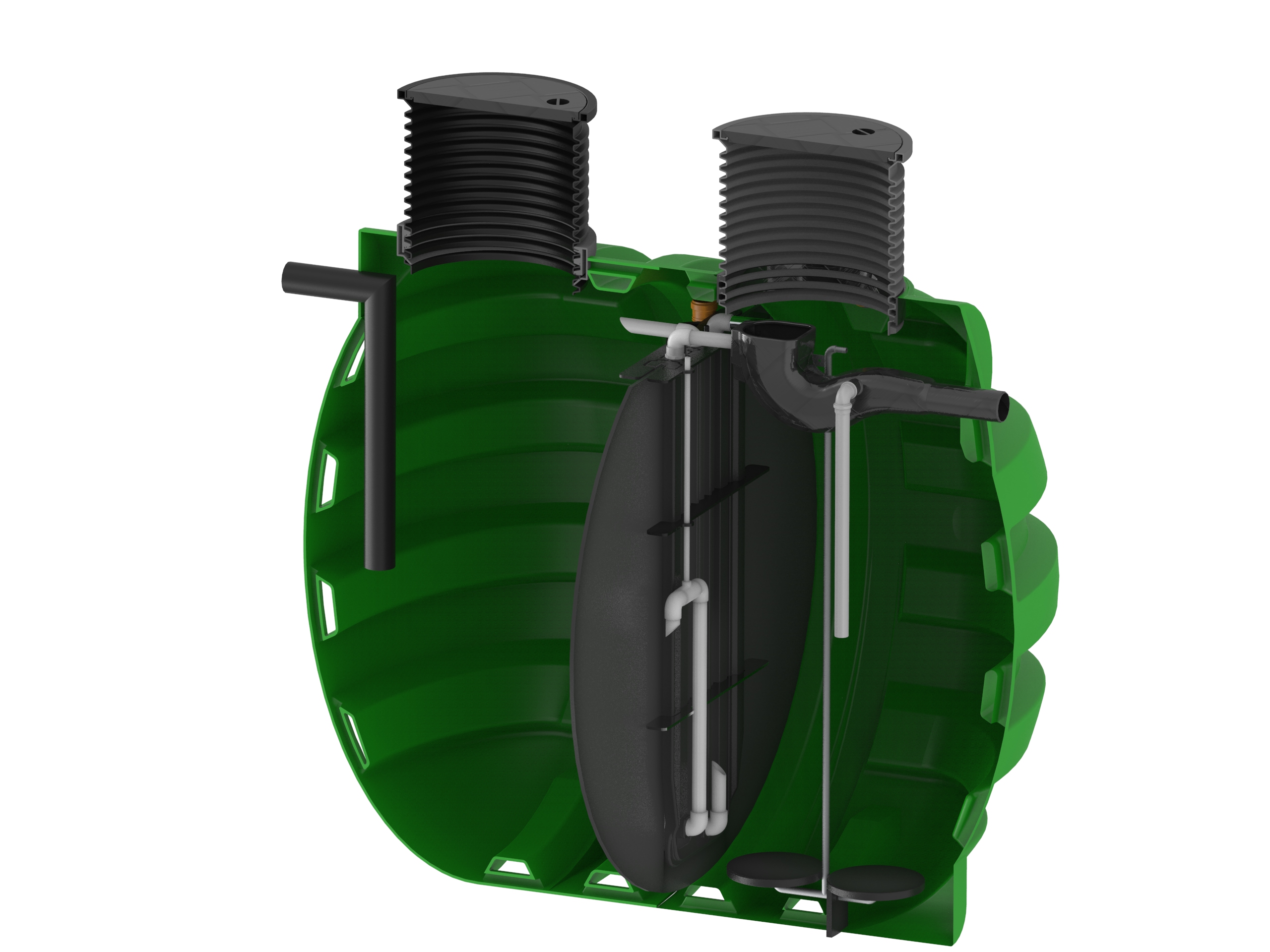
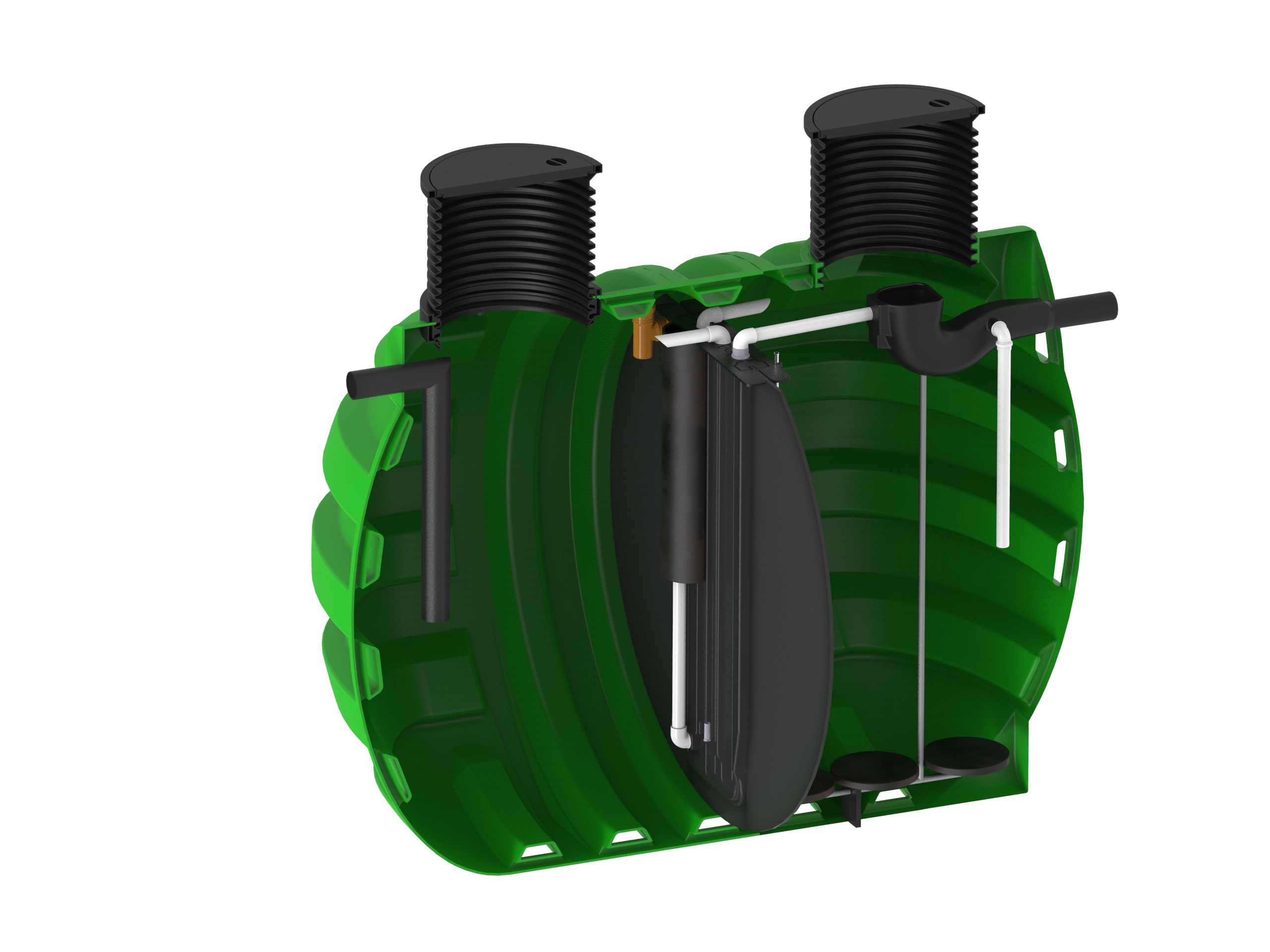
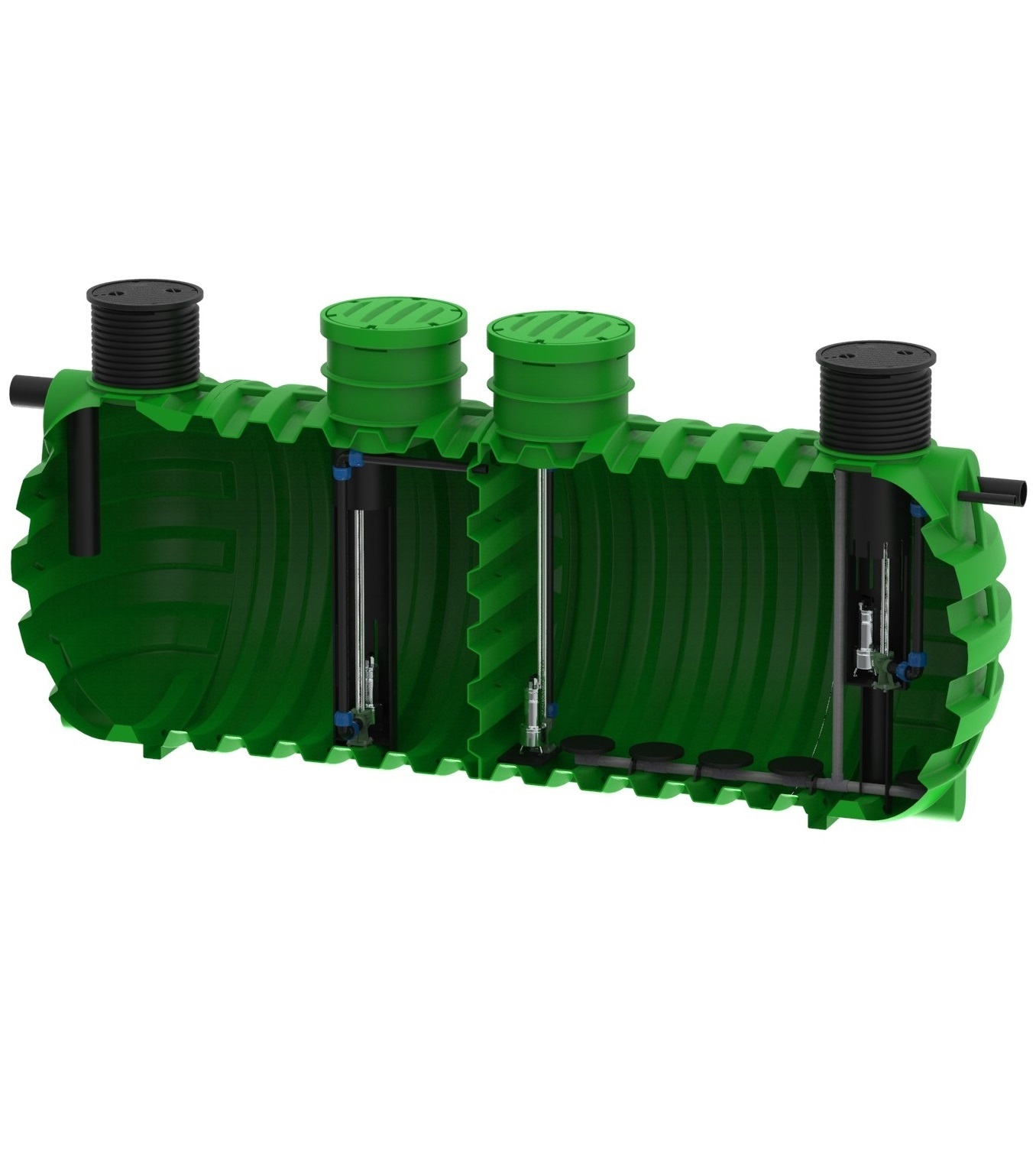
The Roclean in detail
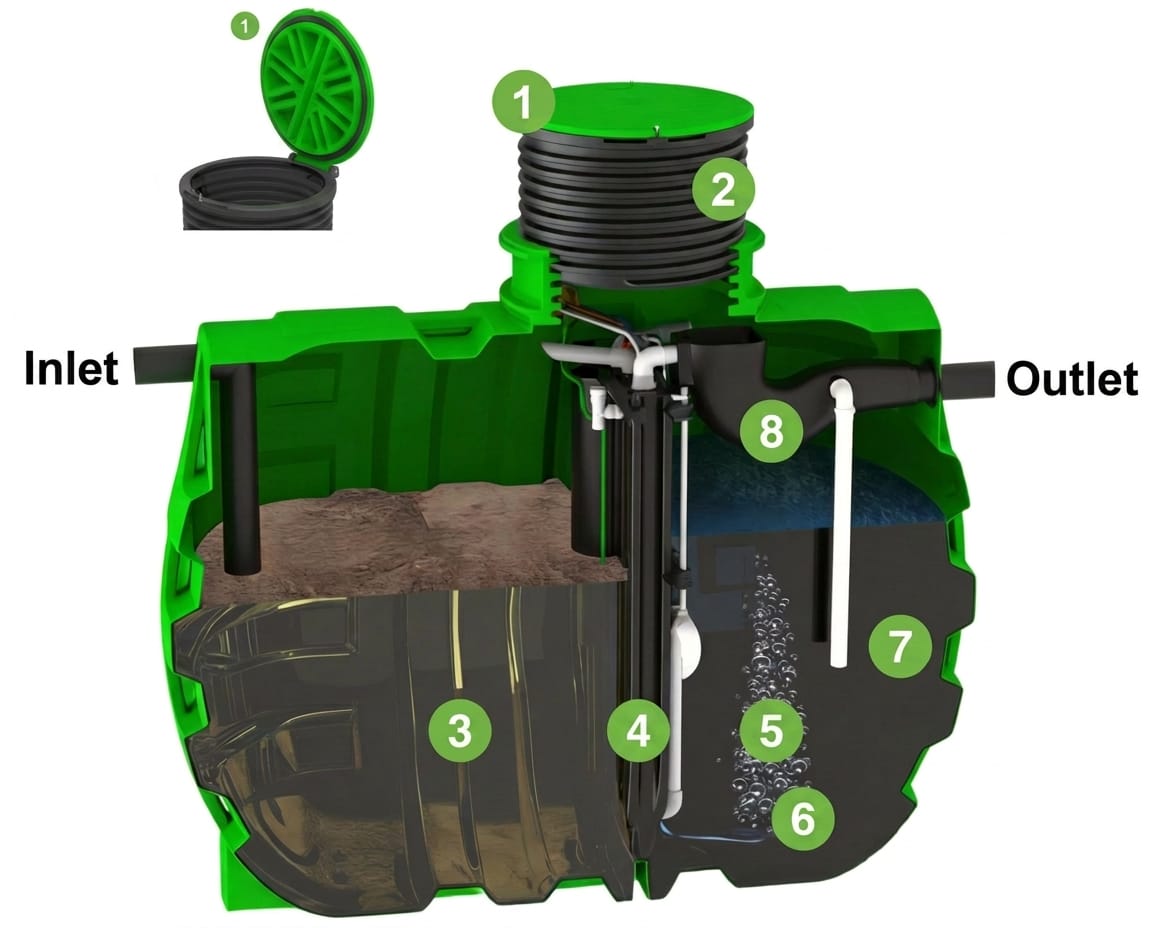
- Cover with hinge
- Telescopic Extension
- The cover can be easily screwed onto the tank and readily adapted to the terrain. It is compatible with additional extensions in the event of deep underground installation. The dimensions of the extensions are Ø600 mm x 300 mm (length).
- Sedimentation chamber
- Air-lift pumps
- Aeration tank
- Air Distributor
- PE tank with integrated wall
- Sampling shaft
- In smaller RoClean systems, the sampling shaft is integrated, self-cleaning, and easily accessible via the inspection opening.
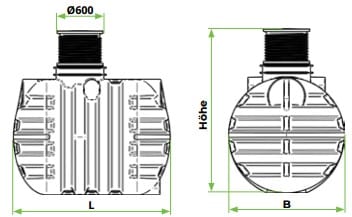
How SBR Wastewater Treatment Works
- Sludge storage
- SBR reactor
- Reactor filling
- Biological treatment by microorganisms
- Sedimentation of solids
- Clear water discharge
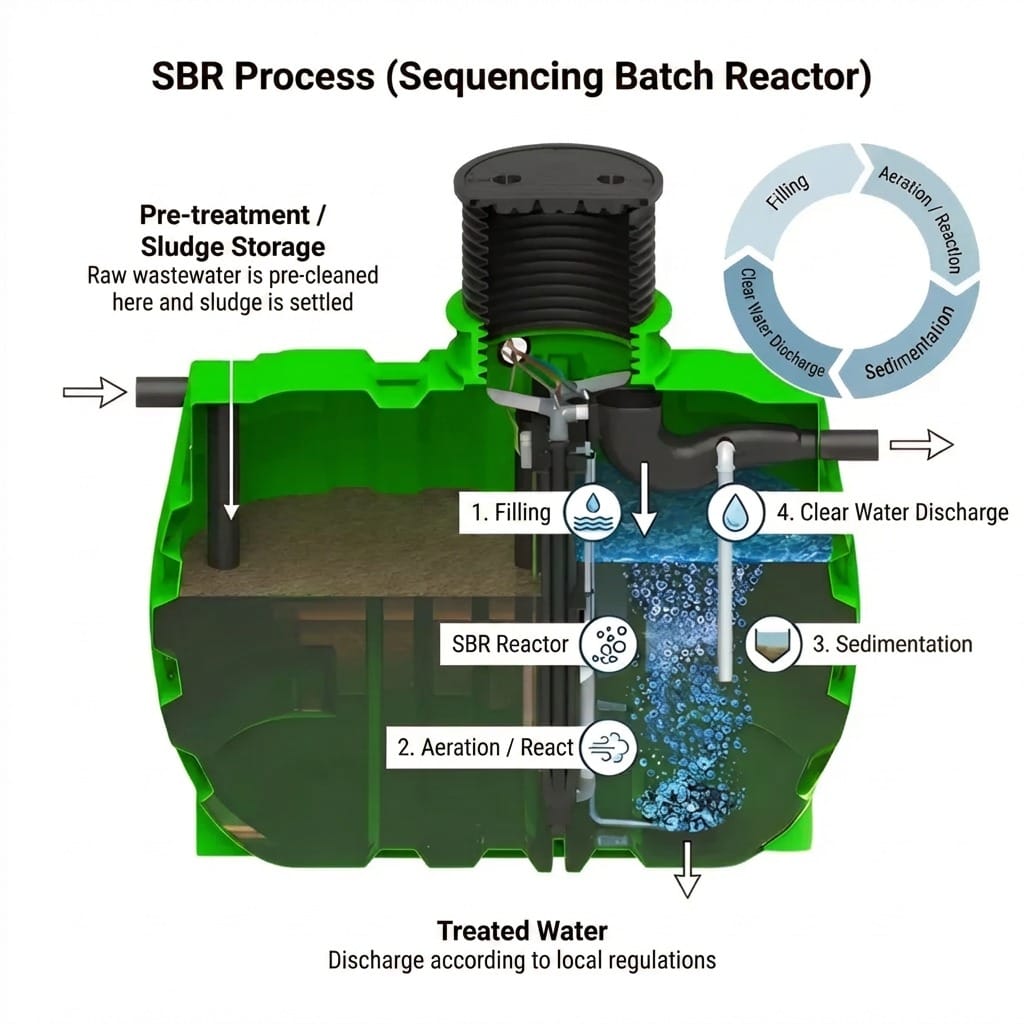
Technical data and dimensions
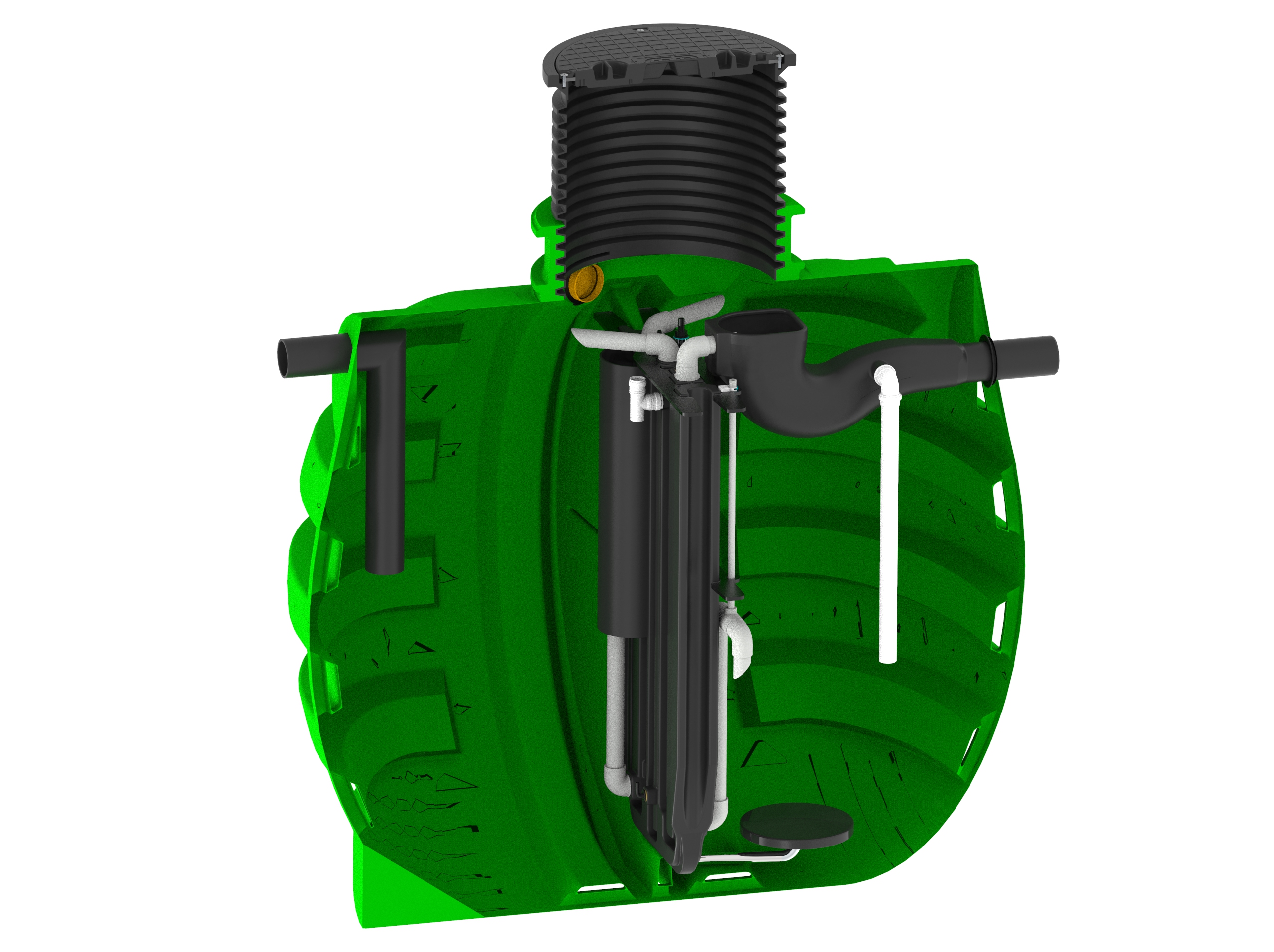


Roclean advantages
- High Cleaning Performance: Discharge Class C as standard; optional Discharge Classes N, D, +H, and +P available.
- Efficient SBR Technology: Automated Biological Purification Process
- Quick Installation: Compact design for easy installation.
- Pre-assembled Technology: Plug-and-play system for rapid commissioning
Safety & Structural Analysis
- One-Piece PE Tank: Manufactured via rotational molding, without weld seams.
- High Wall Thickness: Tank walls of 8–14 mm for maximum stability.
- High Load-Bearing Capacity: Resistant to soil and groundwater pressure.
- Reinforcing Ribs: Additional stability under earth loads
- Large Inspection Opening: DN600 or DN800 for easy access to the system.
- Maintenance-friendly design: facilitates inspection, service, and maintenance.
- Telescopic Extension: Flexible height adjustment to terrain and installation depth.
- Integrated Sampling Port: Self-cleaning in smaller systemsž
Installation
Quick and easy installation
